Unbleached Parchment Paper Sheets, Cut to Size
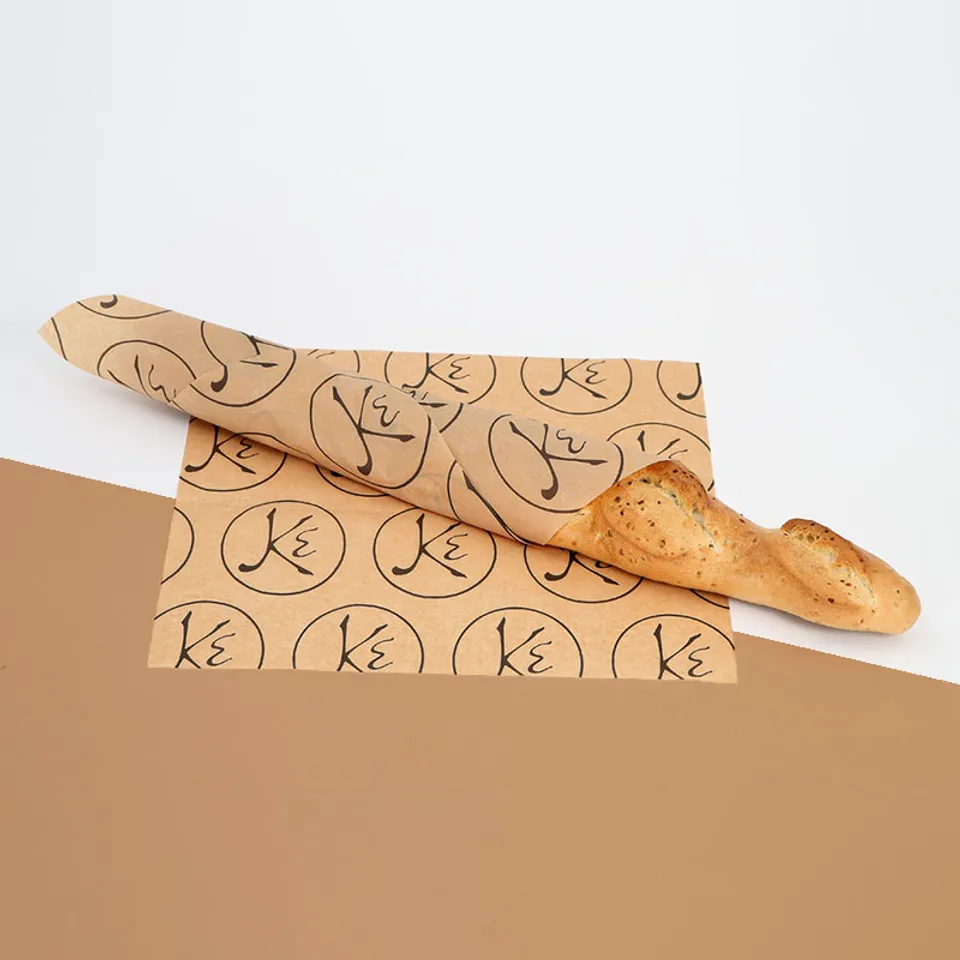
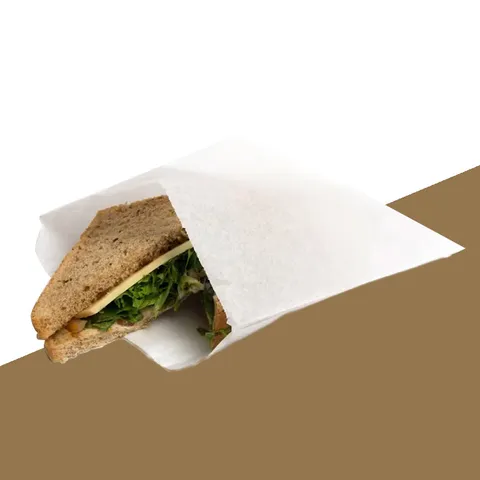
Unbleached parchment paper is the kraft-tone sheet in the photos: a mottled tan with no chlorine bleaching in the pulp. It lines sheet pans to 420°F, wraps a baguette or a hot sandwich, and takes one color of print without looking busy.
From $0.30 a sheet. Written quote in one business day and a free design proof.
Specifications
| Stock | Unbleached parchment, natural kraft-tone |
|---|---|
| Coating | Silicone one side, silicone both sides, or Quilon |
| Heat (typical) | To 420°F in a conventional or convection oven |
| Typical weight | About 30–40 lb |
| 1–2 food-safe colors, printed on the outer face | |
| Typical sizes | 12 × 12, 12 × 16, 15 × 15, 16 × 24 in |
| Packing | Flat in cartons of 500 or 1,000 sheets |
| Minimum | 1,000 sheets; 4–6 business days after proof |
Unbleached parchment paper is baking parchment made from pulp that was never bleached, so it keeps a tan, slightly mottled tone. It is grease-resistant and heat-stable like white parchment, and most kitchens use it where the paper is seen: wraps, basket liners, display trays. We cut it to any sheet size and print on it to order.
Why unbleached sheets
White parchment can look clinical next to sourdough, a muffin case or a deli counter. The kraft tone sits with the food instead of against it, and a smear of butter or a grill mark barely shows.
In the pan it does the same job as bleached stock. Cookies release, pastry browns from the bottom, and a wet dough does not glue itself to the sheet.
Order the usual 12 × 16 in sheet if you line half sheet pans. If you mostly wrap, ask for a square; a 12 × 12 in sheet folds around a sub without a long tail.
Sizes and formats
| Format | Typical size | Typical use |
|---|---|---|
| Sheet | 12 × 12 in | Wrap and liner square |
| Sheet | 12 × 16 in | Half sheet pan, the usual pick |
| Sheet | 15 × 15 in | Pizza and platter liner |
| Sheet | 16 × 24 in | Full sheet pan |
Sizes are typical starting points. Any other size is a custom cut; ask on the quote.
See all sizesDesign Your Custom Unbleached Parchment Paper
Drop your logo on unbleached parchment paper to see how the print looks before you ask for the quote.
What unbleached parchment paper is and who orders it
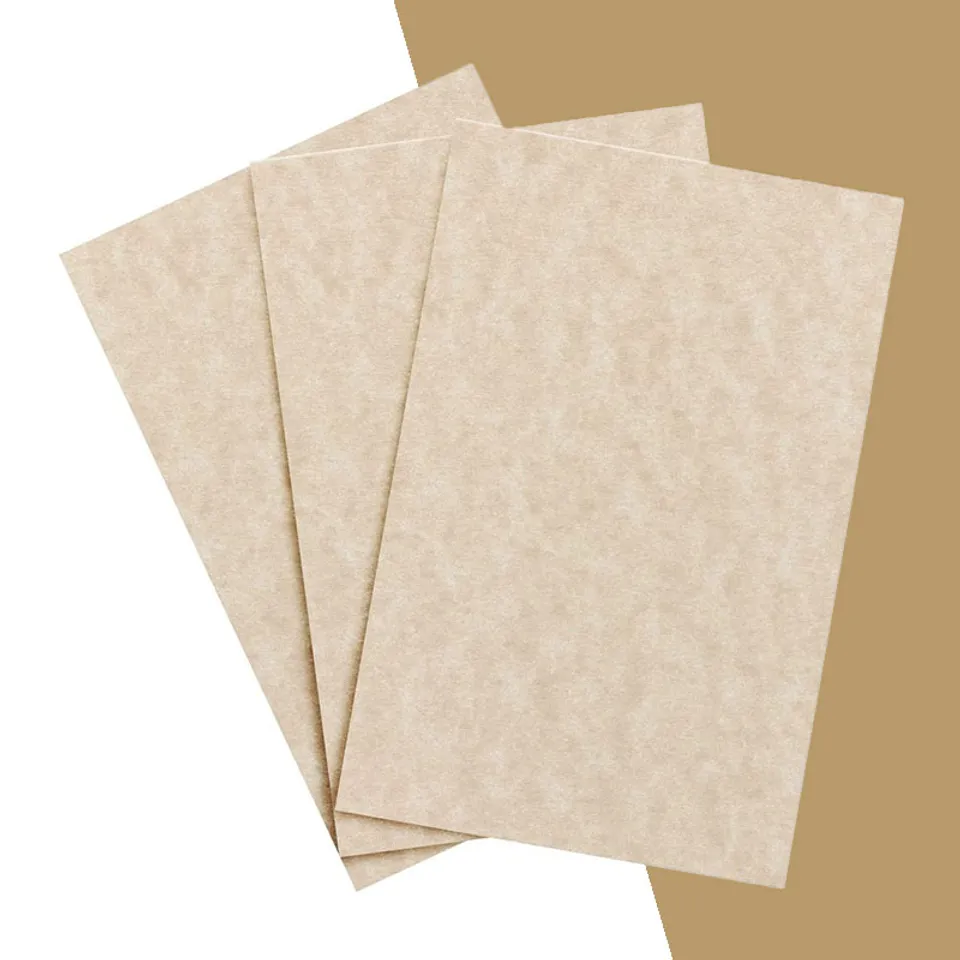
Look at the first photo. Three sheets, tan with a cloudy fiber pattern, each slightly different from the next. That is unbleached parchment: the pulp skipped the bleaching stage, so the paper keeps the color of the fiber.
It is still parchment. The sheet is dense, grease-resistant and treated so food lets go of it in the oven. What changes is how it looks on a counter and how a logo reads on it. Tear a sheet and the edge is fibrous and soft; fold it and the crease holds.
Bakeries buy it for bread, cookies and rustic pastry. Delis and sandwich shops buy it for wraps and basket liners. Food brands buy it printed, as a sheet that goes around a loaf or a block of cheese before it reaches the shelf.
Sizes, stocks and the other sheet formats are grouped on the parchment sheets range page.
How does unbleached parchment behave at 420°F?
Unbleached stock is rated to about 420°F, a little under silicone-coated white. At 350°F to 400°F, where most bread, cookies and sheet-pan dinners live, it sits flat and does not scorch.
Edges that hang over the rim of a pan brown first, so trim the sheet to the pan or fold the excess under. Keep it away from the broiler and off the floor of the oven.
Release is good on cookies, laminated dough and roasted vegetables. A cheese-heavy bake or a very sugary glaze may leave a thin film; that is normal for any parchment, and the sheet peels away clean once the bake has cooled for a minute.
Moisture matters more than heat. A wet focaccia dough held on the sheet for an hour before baking will soften the paper. Dust the sheet or shorten the rest. Our guide on parchment paper temperature limits covers the numbers for every stock.
Which unbleached sheet size fits your pan or wrap?
Four sizes cover most kitchens. Line a pan, wrap a sandwich or divide a stack of patties, and one of these fits.
| Typical size | Where it goes | Note |
|---|---|---|
| 12 × 12 in | Sandwich wraps, basket liners | Folds around a 6 in sub with a short tail |
| 12 × 16 in | Half sheet pan | The usual pick; sits inside the rim |
| 15 × 15 in | Large wraps, bread sleeves | Wraps a baguette with a double fold |
| 16 × 24 in | Full sheet pan | Covers the base; fold the corners for a tight fit |
A quarter sheet pan takes a 12 × 16 in sheet folded in half. Anything outside this list is a custom cut; tell us the pan and we cut to it. The sheet sizes by pan chart lists more pans.
Coating choices on unbleached stock
Unbleached parchment comes with three coating options. The coating decides release and reuse; the stock decides the look.
- Silicone, one side: the usual choice for lining pans. Release is clean and a sheet survives two or three bakes.
- Silicone, both sides: for sheets that get flipped or layered, such as stacking patties or interleaving pastry.
- Quilon: a lower-cost release coating for single-use work, such as wraps and tray liners that are thrown out after one service.
If the sheet never meets an oven, Quilon is enough. If you bake on it, take silicone. The silicone, Quilon and unbleached comparison goes deeper.
Which colors print well on kraft-tone parchment?
Look at the second photo. A single dark mark, repeated across the sheet, on tan paper. That is the print job unbleached parchment does best.
One color on unbleached; two looks muddy on kraft. Black, deep brown, navy or a dark burgundy read well. Pale colors and white sink into the tone and disappear. If the brand mark is a pastel, print it as a dark outline instead and keep the pastel for the box.
Step-and-repeat is the usual layout for wraps: the logo lands somewhere visible however the sheet is folded. A single centered logo works for a liner that sits flat in a tray.
Send vector artwork and a Pantone number. We print with food-safe soy and water-based inks on the side that faces away from the food, and you see a free proof before anything runs. Read how to print a logo on parchment before sending files.
Is unbleached parchment paper the same as kraft paper?
No. Kraft paper is plain brown packing paper; it soaks up grease and sticks to anything baked on it. Unbleached parchment shares the color, not the behavior.
The tell is the surface. Parchment feels dense and slightly glossy, and water beads on it. Kraft feels fibrous and drinks a drop of oil straight in.
If a supplier offers brown wrap at a kraft price, ask whether it is coated parchment. For a hot sandwich, the difference is a dry bag or a translucent one by the time it reaches the table. Butcher paper is the same story: fine around a cold cut, wrong under a cookie.
Packing, dispensers and the pass
Sheets arrive flat, interleaved in cartons so the stack lifts out without curling. A case of 1,000 at 12 × 16 in sits on a shelf under the bench and feeds a line for weeks.
For a wrap station, keep a short stack in a cut-down carton at the pass. Unbleached hides fingerprints and sauce better than white, so the stack still looks tidy at the end of a shift.
Store the cartons dry. Humidity softens parchment, and a damp sheet wrinkles when it hits heat. A carton of 500 suits a wrap counter that does not want a year of paper in the dry store.
Mistakes to avoid with unbleached sheets
Most complaints trace back to one of these.
- Running two or three ink colors on kraft tone. The result is muddy and the proof will show it.
- Expecting a bright white logo. White ink on tan paper prints gray.
- Leaving a wet dough on the sheet for a long proof without a dusting of flour.
- Using a 12 × 16 in sheet on a full sheet pan and letting the gap burn onto the bare metal.
- Pushing the sheet past 420°F for a pizza finish; use a stone or a steel instead.
How to order unbleached parchment paper
Everything is quoted, proofed and cut to order, so the steps run in this order.
- Send the sheet size, the coating, the quantity and any artwork through the parchment quote form. The minimum run is 1,000 sheets.
- We reply with a written quote within one business day. From $0.30 a sheet; the exact figure depends on size, stock and ink count.
- Approve the quote and we send a free design proof. Edits are unlimited at this stage.
- Approve the proof. Production takes 4 to 6 business days.
- Tracked delivery is free and lands at any US address in 2 to 3 business days. Report a misprint or a crushed carton within 10 days, with photos, and we reprint or refund.
Unbleached Parchment Paper questions
Is unbleached parchment paper bleached at any stage?
No, there is no chlorine bleaching in the pulp, so the tan color is the fiber's own. That is why no two sheets have quite the same mottle.
What temperature can unbleached parchment paper take?
About 420°F is the typical limit for unbleached stock. Keep it away from the broiler, open flame and the oven floor, and trim any overhang that would brown first.
Why does unbleached parchment paper look blotchy?
The cloudy pattern is the fiber showing through, not a defect. Bleached stock hides it; unbleached shows it, and the pattern varies a little from batch to batch.
Can I print a white logo on unbleached parchment paper?
We advise against it. White ink on a tan sheet comes out gray and soft-edged; a dark single color reads far better on this stock.
Does unbleached parchment paper change how the base browns?
Not in any way you would notice. Browning comes from the pan, the rack height and the sugar in the dough, and the paper tone makes no measurable difference.
Which coating suits unbleached parchment paper for sandwich wraps?
Quilon, if the wrap is single use and never goes back in an oven. Choose silicone if the sandwich is grilled or reheated in the paper.
Can unbleached parchment paper sheets be reused?
Silicone-coated sheets typically manage two or three bakes before release fades. Quilon-coated sheets are single use.
Will my unbleached parchment paper match the photo exactly?
Close, but not to the shade. Unbleached stock shifts slightly between batches, and that color shift within trade tolerance is normal for this paper.
What is the usual sheet size for unbleached parchment paper?
12 × 16 in, which lines a half sheet pan and folds in half for a quarter pan. Wrap counters more often take 12 × 12 in.
Can unbleached parchment paper be cut to a size not in the table?
Yes, any size is a custom cut. Give the finished dimensions in inches on the quote and we cut to them.
How many sheets is the minimum for unbleached parchment paper?
1,000 sheets, plain or printed. One size and one coating per run keeps the quote simple, though you can order several runs together.
Do you send samples of unbleached parchment paper?
Ask on the quote and tell us the size and coating you have in mind. We will say what we can send with the written price.
Something else? Ask us on WhatsApp or call (503) 461-4788.
Tell us what you bake or wrap
Send the parchment, a size and a quantity, plus a logo if you have one. We reply in writing within one business day with a price and a free design proof. Prefer to talk? Call (503) 461-4788 or message us on WhatsApp.