Silicone vs Quilon vs Unbleached Parchment: Which Coating for Your Kitchen?
By the team at The Parchment Paper ·
Every parchment sheet carries a release coating, and the coating decides how hot the sheet can go, how many bakes it survives and what it costs. This guide walks through silicone, Quilon and unbleached parchment so you can match the coating to the pans you run every day.
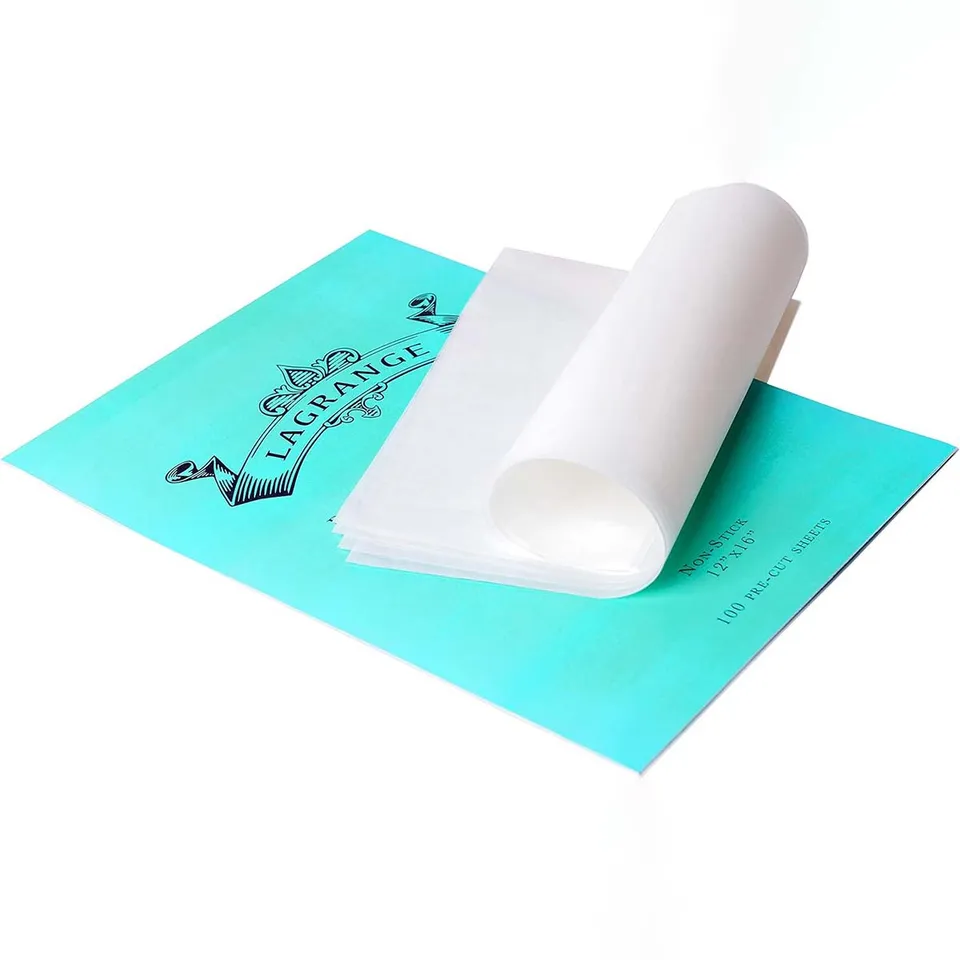
Need a price? Pick a parchment and a quantity; a written quote comes back within one business day.
What a release coating does on the pan
Plain paper sticks to dough, scorches at the edges and soaks up butter. A release coating seals the fiber so fat stays on the surface and the baked item lifts away clean.
The coating also slows browning on the underside. A cookie on coated parchment colors evenly instead of taking a dark ring where the pan is hottest.
Three finishes cover almost every US kitchen: silicone, Quilon and the lighter release used on unbleached stock. They look similar on the shelf and behave differently once the oven door closes.
The coating is not a non-stick spray in paper form. It is bonded into the sheet during manufacture, so it does not transfer to the food or rub off on a wet pan.
How does silicone-coated parchment behave at 450°F?
Silicone is the heaviest release of the three and the one rated highest, typically to 450°F. Under a convection fan the sheet stays flat, holds its color and does not go brittle at the corners.
At the top of the range the sheet still yellows a little. That is normal and not a sign of failure, as long as the edges stay soft and nothing flakes.
Sugar, cheese and caramel slide off a silicone surface without tearing the paper. That matters for lace cookies, tuiles and anything glazed before it bakes.
Because the coating is thicker, the same sheet can be wiped and reused for two or three bakes of dry items. Our silicone parchment rolls for ovens are cut to width for lines that run hot all day.
How does Quilon-coated parchment differ from silicone?
Quilon is a chromium-based release applied in a much thinner layer. It gives a clean lift for breads, pastries and sheet-pan dinners and is rated to a typical 420°F.
The thinner layer is also why Quilon is single use. Once a bake has pulled fat and sugar into the surface, the second bake sticks and the sheet may brown or spot.
For a bakery that lines a pan once and discards the sheet, that is no loss. Quilon is usually the lower-priced option per sheet, so it suits high-volume lining where nothing is reused.
Look at a Quilon sheet after a bake of croissants and you will see the butter has tracked into the paper. That is the coating doing its job once and no more.
What is unbleached parchment, and does it carry a coating?
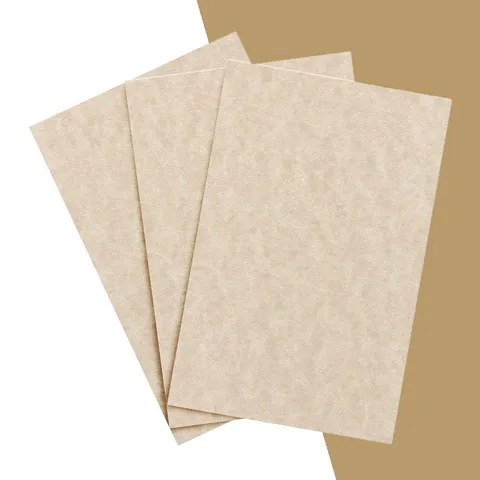
Unbleached parchment is the natural kraft-tone stock. The pulp goes through no chlorine bleaching, so the sheet keeps a warm brown color instead of white.
It still carries a release finish, and we rate it to a typical 420°F in the same bracket as Quilon. The brown tone hides light grease marks, which is why delis and sandwich counters like it on the pass.
Many buyers choose unbleached parchment paper in sheets for the look alone. One dark ink on kraft reads as a finished wrap without a second color.
Release on one side or both: which do you need?
Silicone comes as a one-sided or two-sided coat. Quilon and unbleached stock are usually finished on one side, so the sheet has a face and a back.
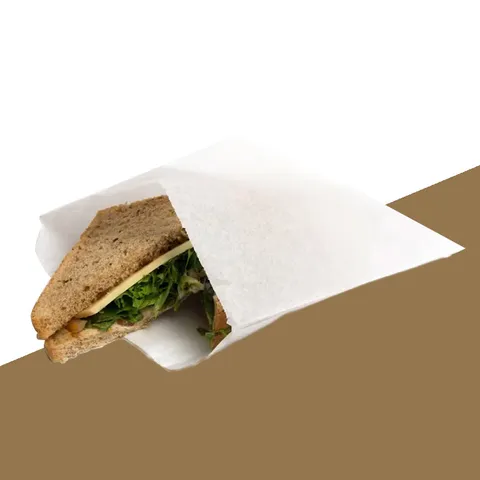
The choice follows what touches the paper. A sheet under a tray of rolls needs release on the top only. A sheet folded around a hot sandwich touches food on both faces, so two-sided release stops the bread from sticking.
Pick the side count by use:
- Pan lining for cookies, bread and roasted vegetables: one-sided is enough and costs less.
- Layering between burger patties, dough rounds or chocolate bark: two-sided silicone separates cleanly from both stacks.
- Wrapping a hot item for the counter: two-sided, since both faces meet food.
- Printed sheets: the ink goes on the back, so the release sits on the food face only.
How many bakes does each coating last?
Reuse is where the three finishes separate most. The figures below are typical trade numbers, not a promise for every oven and every recipe.
| Finish | Typical heat | Release sides | Reuse | Usual weight |
|---|---|---|---|---|
| Silicone-coated | To 450°F | One or both | 2 to 3 bakes of dry items | About 35 to 45 lb |
| Quilon-coated | To 420°F | One | Single use | About 27 to 40 lb |
| Unbleached (natural kraft-tone) | To 420°F | One | Single use | About 30 to 45 lb |
Wet or sugary bakes shorten the life of any sheet. A silicone sheet that lined a tray of jam thumbprints is done after one round, whatever the table says.
Past the heat limit the paper darkens, goes brittle and can flake. None of the three belongs under a broiler, near an open flame or against a heating element.
What does each coating cost per sheet?
Quilon is normally the lowest price per sheet and unbleached sits close to it. Silicone costs more because the coating is heavier and the base paper is often a touch thicker.
Price per bake is a different sum. A silicone sheet reused three times under cookies can work out cheaper than three Quilon sheets, while a single-use line sees no benefit from the heavier coat.
The exact figure for your size and quantity is on the written quote, which we send within one business day. Minimum order is 1,000 sheets or one roll.
Which coating do printed parchment jobs run on?
Printing needs a dry, ink-friendly back. Quilon and unbleached stock both take ink well on the uncoated side, which is why most printed deli wraps and basket liners run on one of those two.
One-sided silicone also prints on its uncoated face. Two-sided silicone does not, because ink will not key onto a silicone surface, so a two-sided job cannot carry a logo.
The ink sits on the back of the sheet and never meets the food. On a sandwich wrap the printed face shows on the outside of the fold, and the release side holds the bread.
All our inks are food-safe soy and water-based, in one to four colors with Pantone solid-coated matches. Look at the printed parchment range for restaurants to see stock and coating paired for each format.
How to pick a coating by what you bake
Work through the items that go on the sheet, from the hottest to the stickiest:
- Anything above 425°F, including pizza, flatbread and high-heat roasting: silicone.
- Sugary or cheesy items that glue to paper, such as tuiles, brittle and gratins: silicone, ideally two-sided if you stack.
- Bread, laminated pastry, cookies and sheet-pan meals below 420°F: Quilon or unbleached, whichever price and look you prefer.
- Sandwich wraps, basket liners and counter service: unbleached for the kraft look, or Quilon-coated white if you print in several colors.
- A line that reuses sheets to save money: silicone, one-sided unless both faces touch food.
- A line that discards every sheet after one bake: Quilon, the lowest cost per sheet.
If one order has to cover all of this, silicone one-sided is the safe single pick. It handles every item on the list, and the only cost is paying for release you will not always need.
Ordering the right coating on your quote
Tell us the pan size, the hottest setting the sheet will see and whether anything touches both faces. That is enough to name the coating.
Mention reuse too. If you plan to wipe and reuse, we will steer you to silicone and a heavier basis weight that holds up to handling.
Pre-cut sheets ship flat in cases, rolls ship as rolls, and production takes 4 to 6 business days after you approve the proof. Ask for a sample of two coatings on the quote if you want to run a test bake before committing to 1,000 sheets.
Quantities of mixed coatings quote as separate lines. A bakery often runs Quilon for pan lining and a smaller count of silicone for its high-heat items on the same order.
Parchment mentioned in this guide
Questions about this guide
Is silicone-coated parchment the same as a silicone baking mat?
No, it is paper with a thin silicone release on one or both faces. It is lighter than a mat, folds around a pan edge and is discarded after two or three bakes.
Can Quilon-coated parchment go to 450°F like silicone?
No, Quilon is rated to a typical 420°F. Above that the thin coating gives out and the sheet browns and goes brittle at the edges.
Does unbleached parchment need a coating to release?
Yes, unbleached stock still carries a release finish on one side. The brown color comes from the pulp, which goes through no chlorine bleaching, not from the coating.
Why does my Quilon sheet stick on the second bake?
The thin Quilon layer absorbs fat and sugar during the first bake. It is a single-use coating, so a second bake on the same sheet sticks and spots.
Should I choose two-sided silicone parchment for stacking patties?
Yes, two-sided silicone separates from both patties without tearing. One-sided release leaves the bare back stuck to whatever sits on it.
Which coating is cheapest for a bakery that lines every pan once?
Quilon is usually the lowest price per sheet. With no reuse, the heavier silicone coat costs more without saving anything.
Can a logo be printed on two-sided silicone parchment?
No, ink does not key onto a silicone surface. Printed jobs run on Quilon, unbleached or one-sided silicone with the ink on the uncoated back.
Does silicone parchment work under a broiler at high heat?
No, none of the three coatings is for broilers, open flames or contact with heating elements. The parchment temperature limits guide covers what happens past the rating.
Is unbleached parchment weaker than silicone-coated white?
Not in itself, since both run about 27 to 45 lb basis weight. The difference is the release, which is lighter on unbleached and limits it to around 420°F and single use.
Can I order one quote with silicone and Quilon sheets mixed?
Yes, list each coating and size as its own line and we quote them together. Each line still meets the 1,000-sheet minimum.
Something else? Ask us on WhatsApp or call (503) 461-4788.
Tell us what you bake or wrap
Send the parchment, a size and a quantity, plus a logo if you have one. We reply in writing within one business day with a price and a free design proof. Prefer to talk? Call (503) 461-4788 or message us on WhatsApp.