Parchment Cooking Pouches, Pre-Folded for Oven and Counter
Parchment cooking pouches are flat, pre-folded parchment bags that close with a fold and cook food in its own steam. Fill one with fish and vegetables for the oven, or slide a hot flatbread into a printed one at the counter.
From $0.30 a pouch. Written quote in one business day and a free design proof.
Specifications
| Stock | Bleached white or unbleached kraft-tone parchment |
|---|---|
| Coating | Silicone on one side (oven) or Quilon (counter handoff) |
| Heat (typical) | To 450°F on silicone; to 420°F on Quilon or unbleached |
| Typical weight | About 30–40 lb |
| Format | Flat pouch, pre-folded, open at one end; fold the mouth to close |
| Plain, or 1–4 colors of food-safe soy and water-based ink on the outside face | |
| Typical sizes | 8 × 10, 10 × 12 (the usual pick), 12 × 15, 15 × 18 in flat |
| Minimum | 1,000 pouches; 4–6 business days after proof approval |
A parchment cooking pouch is a sheet of silicone or Quilon-coated parchment folded flat with the seams already made, so only the mouth is open. You fill it, fold the mouth over twice and bake, and the food steams inside its own packet. The same pouch, plain or printed, also works as a warm handoff bag for bread, flatbread and pastries.
Why a pre-folded pouch beats folding a sheet
Folding a flat sheet into a packet takes a cook a minute or more, and the pleats open if they are loose. A pre-folded pouch is filled and closed with one double fold at the mouth, in seconds, the same way every time.
Inside, the moisture from the fish or the vegetables turns to steam and the pouch puffs up. The food poaches in its own juices and the parchment never sticks, so the packet goes from pan to plate and is cut open at the table.
For a counter handoff, the same pouch keeps a flatbread or a warm roll from sweating the way it would in a closed box. Order plain for the oven, or printed with your mark for anything that leaves the shop.
Sizes and formats
| Format | Typical size | Typical use |
|---|---|---|
| Pouch | 8 × 10 in | Single fish fillet |
| Pouch | 10 × 12 in | Single portion, the usual pick |
| Pouch | 12 × 15 in | Two portions or a whole loaf |
| Pouch | 15 × 18 in | Family portion |
Sizes are typical starting points. Any other size is a custom cut; ask on the quote.
See all sizesDesign Your Custom Parchment Cooking Pouches
Drop your logo on parchment cooking pouches to see how the print looks before you ask for the quote.
What parchment cooking pouches are and who uses them
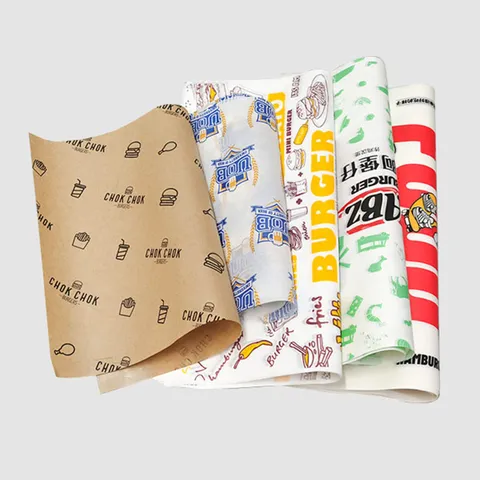
A parchment cooking pouch is a flat bag of coated parchment with its seams already folded, open at the mouth. The third photo shows a stack side-on: each pouch lies flat, so a case takes no more shelf space than a ream of sheets.
Restaurants use them for en papillote fish, chicken and vegetables, one portion per pouch. Meal-prep kitchens fill them cold, chill them and let customers bake at home. Bakeries and pizzerias use printed ones as a warm handoff bag for bread, calzones and folded flatbread.
Plain pouches go to the oven side of the kitchen. Printed pouches go to the counter, where the customer sees them.
What happens inside the pouch in the oven?
Fill a pouch with a fish fillet, sliced vegetables, a knob of butter and a splash of wine. Fold the mouth over twice and bake. Within minutes the liquid turns to steam and the pouch swells like a pillow.
The food cooks gently at the temperature of steam, so fish stays moist and vegetables keep their color. There is no browning inside a closed pouch; if you want color on the fish, sear it first.
Silicone-coated parchment stands up to a 450°F oven for the 12 to 20 minutes a packet usually needs. It releases cleanly when you cut it open. The pouch should sit on a sheet pan, never on the oven floor or under a broiler.
Which pouch size fits the portion?
Measure the flat pouch, not the finished packet. You lose about 2 in of length to the double fold at the mouth and some width to the puff.
| Typical flat size | Holds | Typical use |
|---|---|---|
| 8 × 10 in | One small fillet, or a single roll | Appetizer portions, pastry handoff |
| 10 × 12 in | A 6 to 8 oz fillet with vegetables | Main-course en papillote, the usual pick |
| 12 × 15 in | A whole chicken breast with sides, or a folded flatbread | Large mains, pizzeria handoff |
| 15 × 18 in | Two portions, or a half loaf | Family-style packets, bread bags |
Any other flat size is a custom cut. If a pan size drives your choice, the parchment sizes page shows how many pouches sit on a half or full sheet pan.
How to fill and close a parchment cooking pouch
- Open the mouth and lay the pouch flat on a sheet pan with the mouth toward you.
- Put the vegetables in first as a bed, then the protein, then the fat and the liquid. Keep the fill below half the pouch height so the fold has room.
- Press the air out gently and fold the mouth over on itself about 1 in. Fold it once more and crease hard with the heel of your hand.
- Leave the pouch fold side up on the pan. Steam pressure holds the fold shut from the inside.
- Bake, then slide the pouch onto the plate and cut a cross in the top at the table. Mind the steam.
Plain or printed parchment cooking pouches?
Plain pouches are the pick for the oven line. Nobody sees them, and a plain pouch keeps the quote lowest.
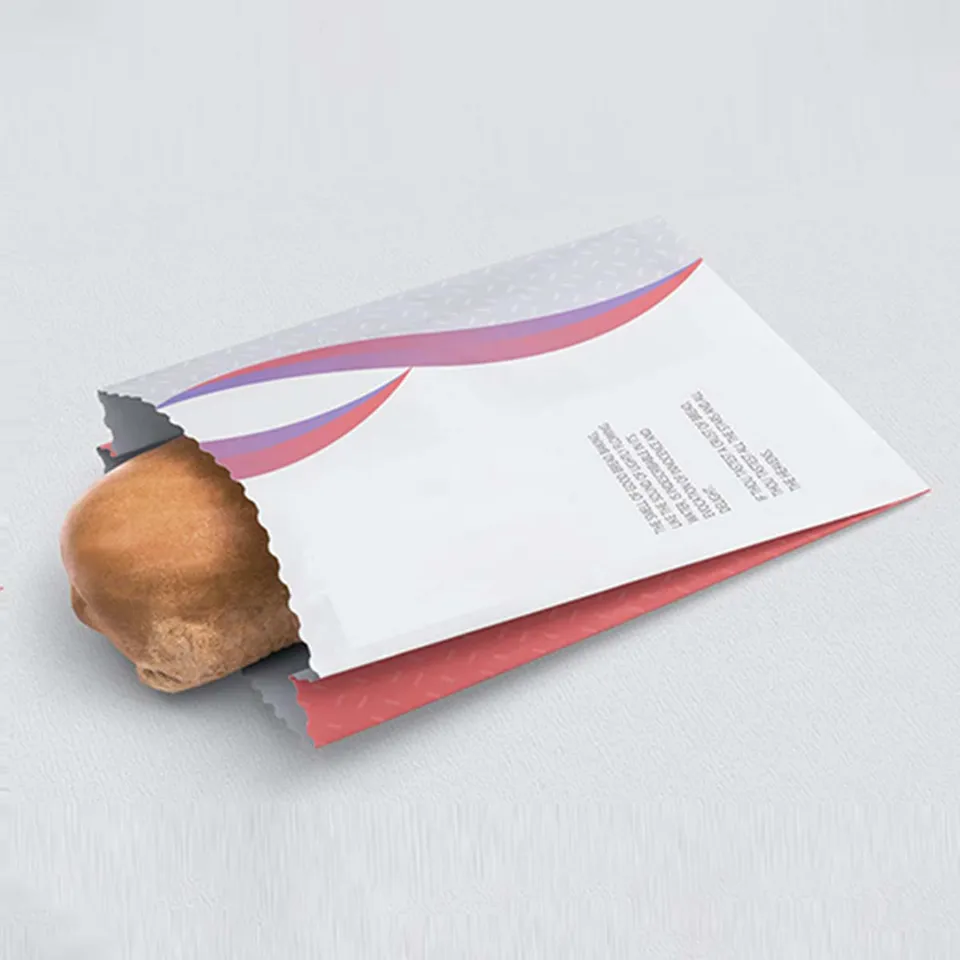
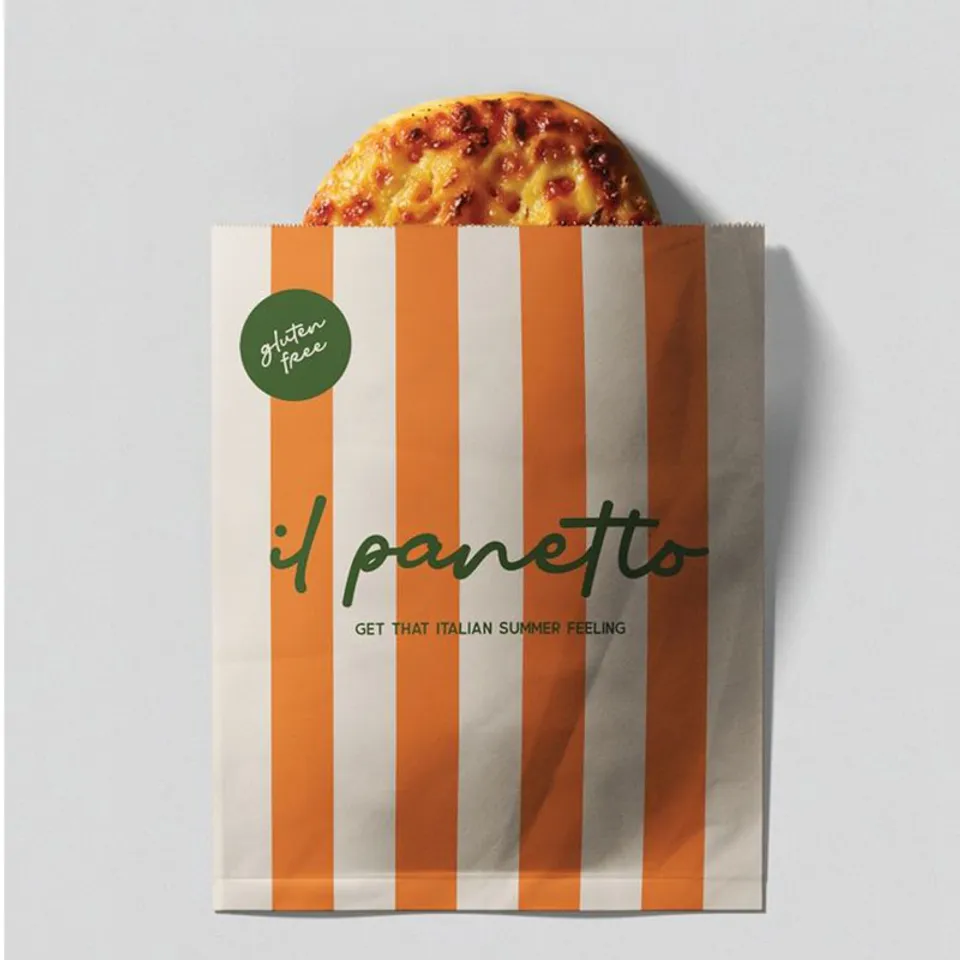
Printed pouches earn their keep at the counter. A one-color mark on the face of the pouch turns a warm roll or a folded flatbread into something that looks sold on purpose. The samples in the first two photos are printed that way. One carries a bold stripe, the other a small logo and a short line of text.
Printing goes on the outside face in food-safe soy and water-based inks, in one to four colors. If the printed pouch also goes in the oven, we print on silicone-coated stock and the ink stays on the outside, away from the food. The logo printing guide for parchment covers artwork files and Pantone matching.
Stock and coating for a pouch
Choose by where the pouch ends up.
- Silicone-coated bleached white for the oven. It releases fish skin and melted cheese and handles 450°F.
- Quilon-coated white or unbleached for the counter handoff. It resists grease from a warm pastry and costs less, and a handoff pouch is used once.
- Unbleached kraft-tone for a rustic look under a one-color print. Two colors on kraft look muddy.
- Silicone on both sides when the pouch is filled, chilled and baked by the customer at home. Neither face sticks after a night in the fridge.
The comparison of silicone, Quilon and unbleached explains the differences in more depth.
Can parchment cooking pouches be filled ahead and chilled?
Yes, and meal-prep kitchens build their whole week on it. Fill the pouches cold, fold the mouth, label the outside and chill them flat on a sheet pan.
Parchment does not go soggy in the fridge the way a plain paper bag does. The coating keeps the liquid on the inside face. Bake from cold and add a few minutes to the time.
Do not freeze a filled pouch and bake it straight from frozen. Ice crystals push the fold open as they expand, and the packet leaks on the pan.
Artwork notes for a printed pouch
- Only the front face shows when the pouch stands up, so put the main mark there. The back takes a small repeat or stays plain.
- Keep artwork at least 1 in from the mouth. That strip folds over, and any print on it ends up creased and hidden.
- Allow for the puff. A pouch swells in the oven, so a logo near the side seams stretches and distorts; center it.
- Send vector art and Pantone solid-coated numbers. One or two colors cover most pouch designs.
- Reheating instructions are a good use of the back face. Keep the type above 6 pt so it survives the paper's tooth.
Lay the pouch out in Design Your Custom Parchment Cooking Pouches and see the front face as the customer will.
Mistakes to avoid with cooking pouches
- Overfilling. A pouch filled past half will not take the double fold, and the steam escapes.
- Baking a Quilon handoff pouch at 450°F. Quilon is rated to about 420°F; the oven line needs silicone.
- Folding the mouth once. One fold opens as the pouch puffs; two folds and a hard crease stay shut.
- Setting the pouch directly on the oven rack. Use a sheet pan, so a leak does not drip onto the heating element.
- Printing a logo across the mouth of the pouch. It gets folded under and is never seen.
How to order parchment cooking pouches
Tell us the flat size, the coating, plain or printed, and the count. From $0.30 a pouch; the exact figure is on a written quote within one business day, and the minimum is 1,000 pouches.
Printed orders get a free design proof with unlimited edits before anything runs. Allow 4 to 6 business days of production after approval. Free tracked delivery then takes 2 to 3 business days to any US address.
Payment is by invoice once you approve the quote and proof. Pouches arrive flat in cases; report any misprint or damage within 10 days with photos for a reprint or refund. Get a parchment pouch quote to start.
Kitchens also order
Parchment Cooking Pouches questions
What is a parchment cooking pouch?
A flat bag of coated parchment with the seams pre-folded and one open end. You fill it, fold the mouth twice and bake, so the food steams in its own juices.
What temperature can parchment cooking pouches take in the oven?
Silicone-coated pouches handle about 450°F and Quilon or unbleached pouches about 420°F. Keep every pouch on a sheet pan and away from the broiler.
Do parchment cooking pouches need a clip or staple to stay shut?
No. Two folds at the mouth and a hard crease hold shut, and the steam inside pushes the fold closed. Keep metal staples away from food.
Which parchment cooking pouch size holds a single fish fillet?
The 10 × 12 in pouch is the usual pick for a 6 to 8 oz fillet with vegetables. Use 8 × 10 in for a small appetizer portion.
Can parchment cooking pouches be printed with my logo?
Yes. Plain pouches suit the oven line, and printed pouches carry one to four colors of food-safe ink on the outside face for handoffs at the counter.
Will food brown inside a parchment cooking pouch?
No. A closed pouch cooks with steam, so fish and vegetables stay moist and pale. Sear first if you want color.
Can I fill parchment cooking pouches ahead and refrigerate them?
Yes. Fill cold, fold the mouth, chill flat and bake from cold with a few extra minutes. Do not bake from frozen; the fold tears.
Are parchment cooking pouches reusable?
No. A pouch is used once, even on silicone stock, because the fold creases and the inside carries the juices from the first bake.
Can a parchment cooking pouch hold a hot flatbread or calzone at the counter?
Yes, and pizzerias use the 12 × 15 in pouch for exactly that. The parchment lets steam out slowly so the crust does not go soft.
What is the minimum order for parchment cooking pouches?
1,000 pouches of one size, plain or in one printed design. Sheets and rolls are separate lines on the quote.
How are parchment cooking pouches packed when they arrive?
Flat, stacked in cases, so they take about the same shelf space as a ream of sheets. Store them dry and away from the stove.
What if my printed parchment cooking pouches arrive with a misprint?
Send photos inside 10 days and the order is reprinted or refunded. Approved-proof errors and minor color shift on unbleached stock are not counted as misprints.
Something else? Ask us on WhatsApp or call (503) 461-4788.
Tell us what you bake or wrap
Send the parchment, a size and a quantity, plus a logo if you have one. We reply in writing within one business day with a price and a free design proof. Prefer to talk? Call (503) 461-4788 or message us on WhatsApp.