Parchment Paper in the Air Fryer and Oven: Temperature Limits That Matter
By the team at The Parchment Paper ·
Parchment is oven-safe, but every sheet has a ceiling, and an air fryer tests it in ways a deck oven never does. Here are the typical limits, what the paper does when you pass them and the handful of rules that keep a liner where it belongs.
Need a price? Pick a parchment and a quantity; a written quote comes back within one business day.
How hot can parchment paper go in the oven?
Silicone-coated parchment is rated to about 450°F in typical trade specs. Quilon-coated parchment and unbleached parchment with a silicone finish are rated to about 420°F. Treat those as ceilings, not targets.
Most bakery work sits well under them. Cookies at 350°F, bread at 400°F to 425°F, roasted vegetables at 425°F. The jobs that crowd the limit are pizza, high-heat roasting and anything in a convection oven with the fan on full.
The rating is for the sheet with food on it. An empty sheet in a hot oven has nothing to pull heat away from it and browns faster than a loaded one.
Basis weight matters a little. A 45 lb sheet holds its shape longer at the limit than a 27 lb sheet, but the coating sets the ceiling and extra weight does not raise it.
What happens to parchment past its limit?
It does not burst into flame the moment the dial passes 450°F. It browns, then goes brittle, then smokes, in that order and over minutes rather than seconds.
- Browning. The sheet turns tan at the exposed edges first, where nothing shields it. Unbleached paper hides this; bleached white shows it straight away.
- Brittleness. The fibers dry out. A sheet that was flexible going in cracks when you lift a corner, and a liner with cut corners splits along the fold.
- Curling. Edges that stand above the food lift, roll back and touch the oven wall or the rack above.
- Smoke. A curled edge that meets a heating element or sits at 500°F scorches and smokes. This is the point at which a sheet stops being a liner and becomes a hazard.
A sheet that has gone brittle but not scorched is finished. Do not reuse it; the next bake takes it from brittle to burning.
Why does parchment never go under a broiler?
Broilers, salamanders, grill grates and open burners all put the paper within inches of a heat source running far above 450°F. The rating assumes radiant and convected heat from an oven cavity, not direct contact.
The same rule covers the heating element in the floor of a toaster oven and the exposed element at the top of many countertop ovens. If the paper can touch the element, or hang within a couple of inches of it, cut it smaller or line a different pan.
Never use parchment on an open flame, on a wood-fired oven floor or under a torch. The coating is what makes the sheet release; it is not what makes it fireproof.
- Broiler and salamander: no parchment, ever.
- Toaster oven with an exposed lower element: trim the sheet to the tray and keep it off the rim.
- Grill grates and smoker racks: no parchment.
- Pizza oven floor above 500°F: no parchment; launch on a peel with semolina instead.
- Hot holding cabinet: fine, but the sheet keeps aging while it sits there.
Does a convection fan change the rules?
A convection fan does not raise the oven temperature, but it does two things to parchment. It dries the sheet faster, so browning and brittleness arrive sooner at the same setting. And it lifts any edge that is not held down.
A 16 × 24 in sheet on a full sheet pan lies flat. An 18 × 26 in sheet cut edge to edge creeps up the rim, and the fan catches the lip that stands proud of the pan. The corner then folds over onto the food or lifts toward the top element.
The fix is a sheet a little smaller than the pan, or a load that reaches the edges. Weigh an empty corner with a second pan if you must preheat with paper in place, or better, do not preheat with paper in place at all.
Silicone-coated sheets handle a fan better than Quilon, because the higher rating gives you the margin that the fan eats. Silicone parchment rolls for convection ovens are what most high-heat lines run.
What are the air fryer rules for a parchment liner?
An air fryer is a small convection oven with a very strong fan and an element close to the basket. Everything that goes wrong with parchment in a big oven goes wrong faster here.
- Put the liner under food only. The weight of the food is what holds it down. An empty liner lifts, spins and hits the element within seconds.
- Never preheat with an empty liner in the basket. Preheat bare, then drop the liner and the food in together.
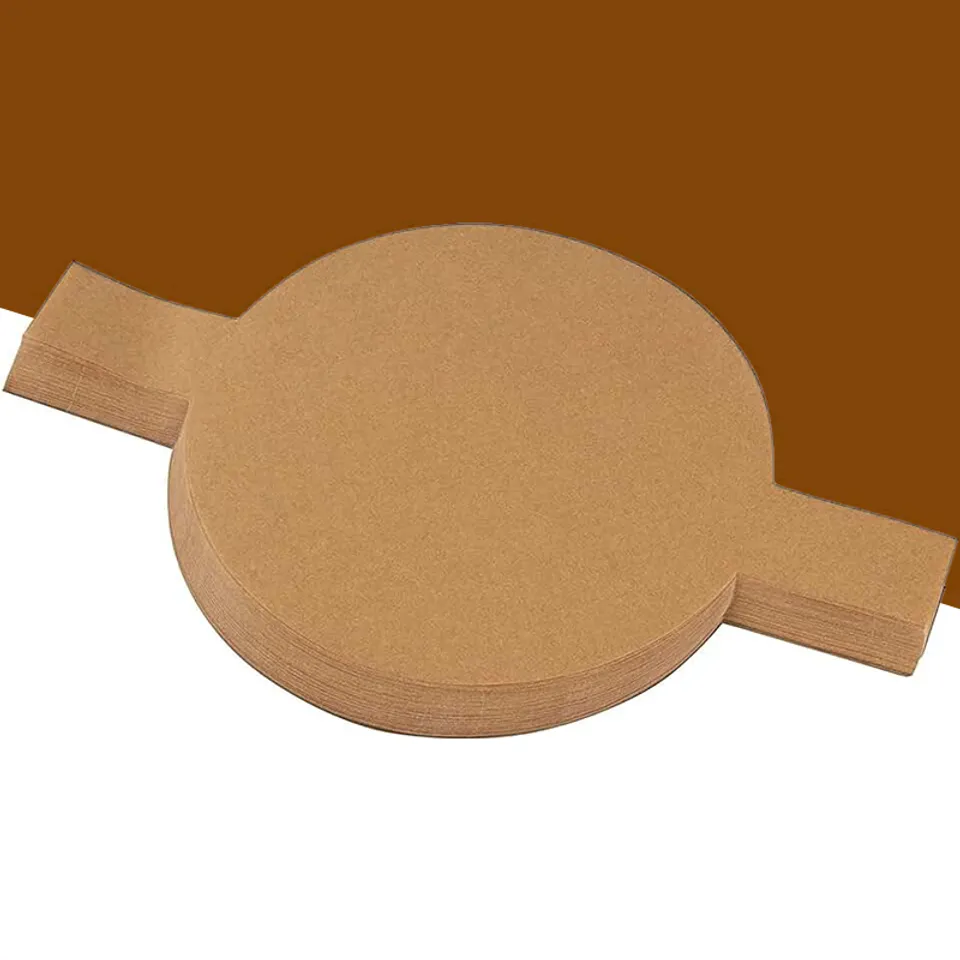
- Use a liner with lift tabs, or fold two tabs into a plain square. Tabs let you pull the food out without tipping the basket, and they fold down below the rim during the cook.
- Size the liner to the basket floor, not the rim. A liner that climbs the wall blocks the airflow that does the cooking, and the part above the food lifts.
- Keep the liner clear of the element. If the basket sits within an inch of it, cut the liner smaller or skip it for that job.
- Change the liner when it browns. One cook per liner is the safe rule for Quilon; a silicone liner sometimes manages a second cook of something dry.
Which liner size fits the basket floor?
Measure the flat floor of the basket, not the opening. Baskets taper, so the rim is often an inch wider than the floor, and a liner cut to the rim stands up the wall.
| Basket floor | Liner to order | Notes |
|---|---|---|
| About 6 in across | 6.5 in round liner with tabs | Tabs fold down inside the wall |
| About 7 in across | 7.5 in round liner with tabs | The usual pick for mid-size baskets |
| About 8 in across | 8.5 in round liner with tabs | Trim the tabs if the wall is vertical |
| Square basket, 8.5 to 9 in | 9 in square liner | Cut corners stop the fold bunching |
| Dual or oblong baskets | Custom cut, ask on the quote | Send the floor measurement in inches |
These are the typical sizes we pre-cut. Any other basket is a custom cut to the floor measurement you send. Air fryer parchment liners with lift tabs list the sizes with their usual baskets.
How many times can a parchment sheet be reused?
Silicone-coated sheets are usually good for 2 to 3 bakes of the same kind of food. Unbleached sheets with a silicone finish manage about 2. Quilon-coated sheets are single use; the coating is spent after one bake.
Reuse counts drop as the temperature rises. A silicone sheet that lasted three cookie bakes at 350°F will last one roast at 450°F.
Retire a sheet when you see any of these:
- Brown or tan patches where the pan was bare.
- A crack when you fold a corner.
- Food that stuck on the last bake where it released on the first.
- A curled edge that no longer lies flat.
- A smell of scorched paper when the oven door opens.
Pan liners and rounds that go under cake batter are single use in practice, because the batter wets the sheet and it will not lie flat again.
Which coating for which hot job?
Pick by the hottest job the sheet will see, not the average one. A sheet rated for the worst day covers every other day.
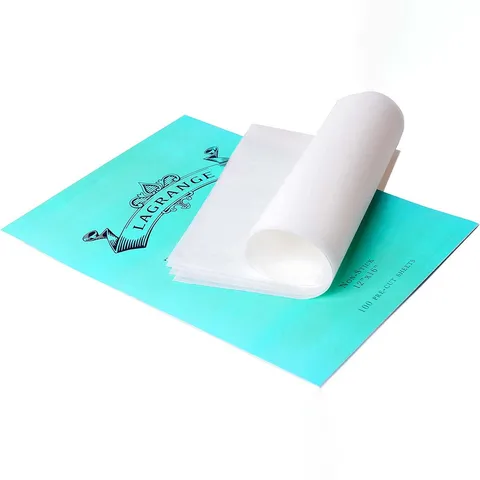
- Up to 420°F, dry bakes: Quilon pre-cut sheets. The everyday liner and the stock most printed work runs on.
- Up to 420°F where the paper shows: unbleached parchment. Cake rounds, display trays, wraps.
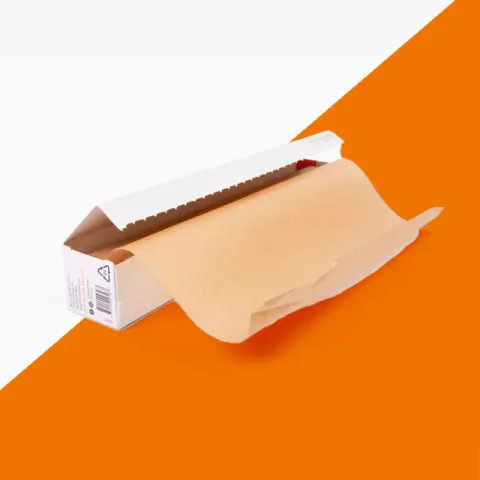
- 420°F to 450°F, convection, sugar work, roasting: silicone-coated sheets or rolls.
- Air fryer baskets: silicone-coated liners with tabs.
- Pouches for fish and vegetables: Quilon or silicone, since the pouch steams at about 400°F and the food shields the paper.
If one order has to cover the whole kitchen, silicone-coated sheets cover every job on the list. The silicone, Quilon and unbleached comparison guide goes deeper on the coating choice.
How do I order parchment for a hot line?
Tell us the pan or basket, the hottest setting it runs at and whether a fan is on. That is enough to pick the coating. Minimum order is 1,000 sheets or liners, or one roll.
A written quote comes within one business day. Printed liners get a free design proof first. Production takes 4 to 6 business days after approval, then free tracked delivery to any US address in 2 to 3 business days, paid by invoice after you approve the quote and the proof.
If a job sits right at the limit, say so on the quote request for parchment and we will suggest the sheet with the most margin.
Parchment mentioned in this guide
Questions about this guide
At what oven temperature does parchment paper start to brown?
Browning begins once the sheet passes its rating, about 420°F for Quilon and unbleached and about 450°F for silicone-coated. Exposed edges with no food on them brown first.
Can parchment paper touch the heating element in a toaster oven?
No. Contact with an element scorches the sheet at once. Trim the paper to the tray and keep it off the rim so nothing hangs near the element.
Is parchment safe under the broiler for the last minute of a bake?
No. A broiler runs far above 450°F and sits inches from the paper. Pull the sheet out before the broiler goes on, or finish without it.
Why did my air fryer parchment liner fly up into the element?
The basket was preheated with the liner empty, or the food was too light to hold it down. Put the liner in with the food on top, never alone.
Should I preheat the air fryer with the parchment liner inside?
No. Preheat the basket bare, then add the liner and the food together. An empty liner in a running air fryer lifts within seconds.
Does a convection fan lower the parchment temperature limit?
The rating stays the same, but the fan dries the sheet faster and lifts loose edges, so browning arrives sooner. Use a sheet slightly smaller than the pan and keep the margin.
How many bakes does a silicone parchment sheet survive at 450°F?
Usually one at that heat. The 2 to 3 bake figure applies to cooler work like cookies at 350°F. Retire the sheet as soon as it browns or cracks at a fold.
Can Quilon parchment go to 450°F if the bake is short?
It is rated to about 420°F, so a short run above that may pass but the sheet will brown and go brittle. Pick silicone-coated for anything that regularly runs that hot.
Does unbleached parchment have a lower heat limit than bleached?
Unbleached with a silicone finish is rated to about 420°F and bleached silicone-coated to about 450°F. The difference is the coating and stock, not the color on its own.
What does smoking parchment mean and should I throw the sheet out?
Smoke means an edge has scorched, usually from curling toward an element or sitting past the limit. Take it out, discard it and check the sheet size against the pan before the next bake.
Something else? Ask us on WhatsApp or call (503) 461-4788.
Tell us what you bake or wrap
Send the parchment, a size and a quantity, plus a logo if you have one. We reply in writing within one business day with a price and a free design proof. Prefer to talk? Call (503) 461-4788 or message us on WhatsApp.